
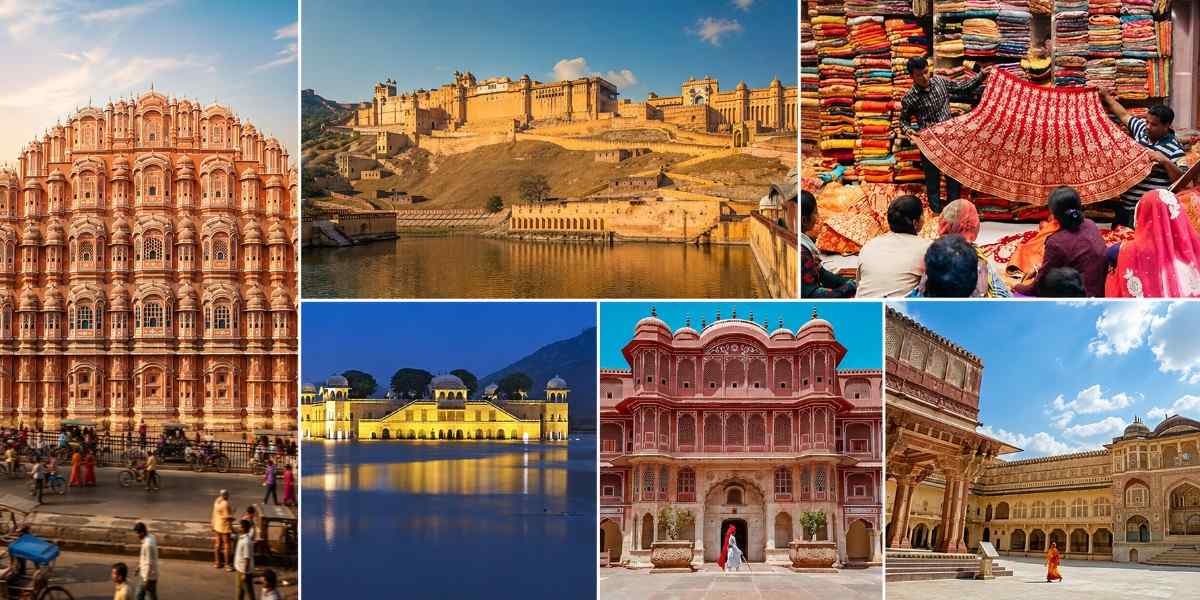
Jaipur is not a city to be read as a list of attractions. Its best travel moments are on different levels: fort ridge above the city, planned Pink City grid, palace courtyards, astronomical instruments, craft bazaars and food lanes. Travelers search for things to do in Jaipur because the city appears compact online but gets tiresome when the forts, markets and museums are mixed up without logic. This guide builds Jaipur around its own geography, so every stop has a purpose.
Read Jaipur from the Ridge Downward
One efficient way to visit Jaipur is to start from the city’s outskirts and then make your way in. The hill forts depict how power was exercised and defense handled, the walled city illustrates the urban design, and the bazaars show why the city still retains its commercial vibrancy. That is why grouping Jaipur tourist places by storyline rather than by the alphabetical order of the names that appear in search results is a more logical approach.
| Jaipur layer | What to see | Why it matters |
| Fort ridge | Amber, Jaigarh, Nahargarh | Views, defense, royal movement |
| Walled city | Hawa Mahal, gates, chaupars | Planning, facades, street life |
| Royal core | City Palace, Jantar Mantar | Power, science, court culture |
| Market belt | Johari, Bapu, Tripolia | Craft, jewelry, textiles, food |
The Fort Ridge Before the City Gets Loud
The most dramatic approach to Jaipur is from the northern ridge. Amber Fort Jaipur is where courtyards, gateways, mirror work, ramparts, and the Maota Lake setting offer an experience slower than a quick photo stop can capture. Restored tunnels towards Jaigarh connect the palace complex, making the wider fort belt feel connected instead of isolated.
Jaigarh adds a military mood; Nahargarh makes the day into a viewpoint experience. On the way, Jal Mahal should be seen as a stop facing the lake, not an interior visit. The order makes practical things to do in Jaipur, because the ridge needs morning energy, walking stamina and clear weather.
- Reach Amber early if photographs and cooler weather matter.
- Keep Jaigarh for visitors interested in weapons, walls and fort engineering.
- Use Nahargarh for views only when the schedule has enough breathing room.
- Avoid stacking all three forts after a heavy lunch or late market visit.
Inside the Pink City, Look Above the Shops
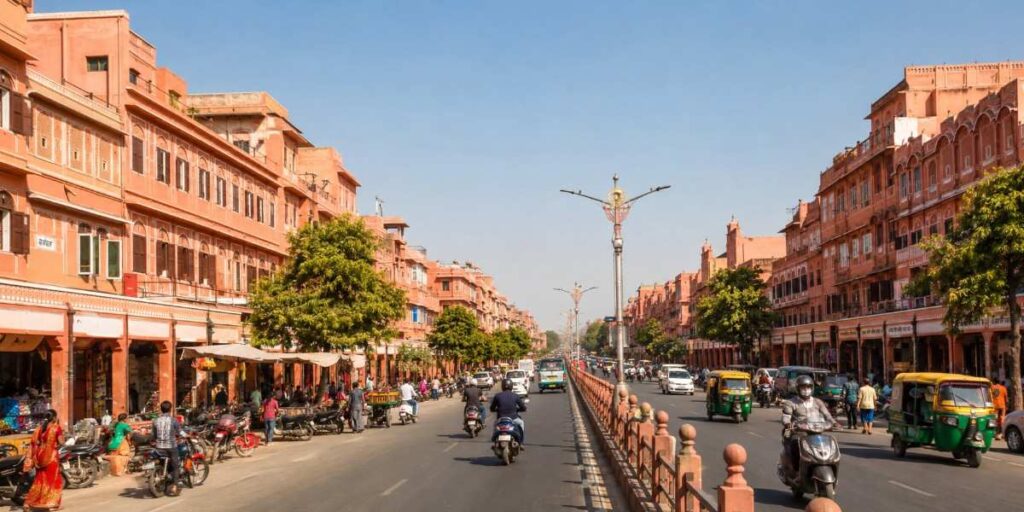
Jaipur’s walled city was founded in 1727 by Sawai Jai Singh II and planned on a grid, with broad streets, bazaars and large public squares called chaupars. That planning still shapes movement around Badi Chaupar, Choti Chaupar, Tripolia Gate and the main bazaar corridors.
The Hawa Mahal Jaipur, built by Maharaja Sawai Pratap Singh in 1799, is the most photographed facade. It had many jharokhas from which the royal women could see the life of the street, but remain unseen themselves. Don’t stop on the other side of the road for a photo. Head down one of the lanes nearby and the building begins to feel like part of a living street, not a postcard.
This old core holds several places to visit in Jaipur, but the real value comes from walking slowly. Look at balconies, shop signs, temple entrances, gate colors and the way commerce still fills the arcades.
Where Palace Life Meets Astronomy
City Palace and Jantar Mantar are so near each other that you can easily visit them on the same day, yet both require different types of attention. City Palace displays princely life by means of courtyards, gateways, cloth, arms, and museum rooms. The palace was built by Sawai Jai Singh II and extended by his successors, so it is a multi-layered home and museum after all.
Jantar Mantar changes the tone completely. It is an early eighteenth-century astronomical observation site with about twenty fixed instruments, recognized by UNESCO for its scientific and architectural value. Read a little before entering, because the instruments become far more interesting when they are understood as working objects, not abstract sculptures.
Bazaars are Jaipur’s Second Museum
The best shopping in Jaipur is when the craft meets the bazaar. Johari Bazaar is best for jewelry and gemstones, Bapu Bazaar for textiles, mojari-style footwear and souvenirs, Tripolia for lac bangles and traditional goods, and Chandpole for marble, wood and handicraft work.
| Bazaar | Better for | Buyer note |
| Johari Bazaar | Jewelry, gemstones, fine craft | Ask questions before buying expensive pieces |
| Bapu Bazaar | Textiles, footwear, casual gifts | Bargain politely and compare quality |
| Tripolia Bazaar | Lac bangles, brass, local goods | Go earlier to avoid dense crowds |
| Chandpole Bazaar | Carving, marble, woodwork | Leave time for careful browsing |
These markets are busy workspaces, not souvenir corridors for the cameras. Have cash on hand for small buys, don’t block shop fronts and check return policies before buying big ticket items.
Eat Where the Walk Naturally Slows
Food in Jaipur should not be saved for the end of the day. The stronger plan is to eat between bazaars, gates and museum visits. Jaipur street food can mean pyaaz kachori, mirchi bada, lassi, kulfi, rabri, ghewar, samosa and chaat, depending on the area and time.
- Pair old-city snacks with bazaar walks instead of a separate cab ride.
- Keep a thali meal for a slower lunch, not a rushed break between forts.
- Choose sweets after shopping when walking becomes lighter.
- Carry water because dry heat and spice-heavy food can tire visitors quickly.
Quieter Detours that Change the Mood
Jaipur’s fort-and-bazaar rhythm is softened by its stops too. Near the Amber side, Panna Meena ka Kund gives geometric stepwell views. Galtaji has temples, hills and water tanks, but you will need sensible shoes and respectful behavior. Albert Hall Museum is a good option when the heat in the afternoon gets tiresome. The color and photography of Patrika Gate suit it, although it should be considered as a short visual stop.
These detours make things to do in Jaipur feel less predictable. Pick one based on route and energy, rather than adding all of them as leftovers.
Combinations that Make Jaipur Harder
| Weak combination | Better decision |
| Amber, City Palace, three bazaars and Nahargarh together | Split ridge and walled city into separate blocks |
| Hawa Mahal only as a roadside photo | Add nearby streets, gates and bazaar time |
| Shopping after every monument | Choose one focused market stretch |
| Lunch before a fort climb | Eat after the ridge section or keep it light |
The smartest things to do in Jaipur are not always the rarest ones. They are the stops placed in the right order, with enough walking time, shade breaks and realistic expectations.
If you happen to be walking outside with your head exposed, you can carry a scarf or a cap, but do keep the bag light in the markets and monuments. Jaipur is a city where rewardful slow paces are rewarded, so you should stop looking at gates, courtyards and shopfronts rather than chasing every viewpoint. Only use licensed guides when a site needs an explanation, particularly for Jantar Mantar or Amber. Although you should be ready for digital payments, it is a good idea to carry some cash to buy snacks, water, and small items. During the peak tourist period, beat your hotel staff’s suggested time and get up earlier. If you are patient when moving, fairly discuss prices and treat historic spaces as living neighborhoods, the city will seem more pleasant to you. Such regulation is what continues to preserve heritage, food, and shopping from becoming the same tired hour to compete with.
Final Takeaway
Thinking of Jaipur as a royal city map, rather than just a list of places to visit, can make the experience more memorable. Let Fort Ridge point to the scale, the walled city shows the layout, the palace quarter represents the court culture, and the bazaars provide the craft and food component. In fact, the best things to do in Jaipur revolve around finding the connections among these layers. Focus on one area at a time, keep the weather and the people in mind, and Jaipur will be a detailed, vibrant, and quite easy-to-manage experience rather than a hurried one.
FAQs
Why does Jaipur’s walled city feel more organized than many old cities?
Jaipur was planned on a grid in 1727, with wide streets, market corridors and public squares. The planned layout gives a sense of structure to the old city, even when traffic and bazaars get crowded.
What should visitors notice inside Amber Fort besides the view?
Amber Fort is worth noticing for its courtyards, gateways, mirror work, water settings, audience halls and links with Jaigarh. The experience becomes richer when visitors move slowly instead of rushing to viewpoints.
Which Jaipur bazaar suits jewelry buyers best?
Johari Bazaar is the largest and most famous market for jewelry, gemstones, and fine crafts. Visitors should compare different shops, ask consistent questions about the quality of the material, and avoid making hurried, high-stakes purchases under pressure.
How can non-science travelers understand Jantar Mantar?
Jantar Mantar can interest non-science travelers because the instruments are monumental, outdoor, and closely linked with royal Jaipur’s planning. A short explanation before entry makes the site easier to understand.
Which Jaipur stop works when the afternoon feels too hot?
Albert Hall Museum is useful during hot afternoons because it offers an indoor cultural break after forts, markets, or palace visits. It also keeps the day active without adding another exposed walk.